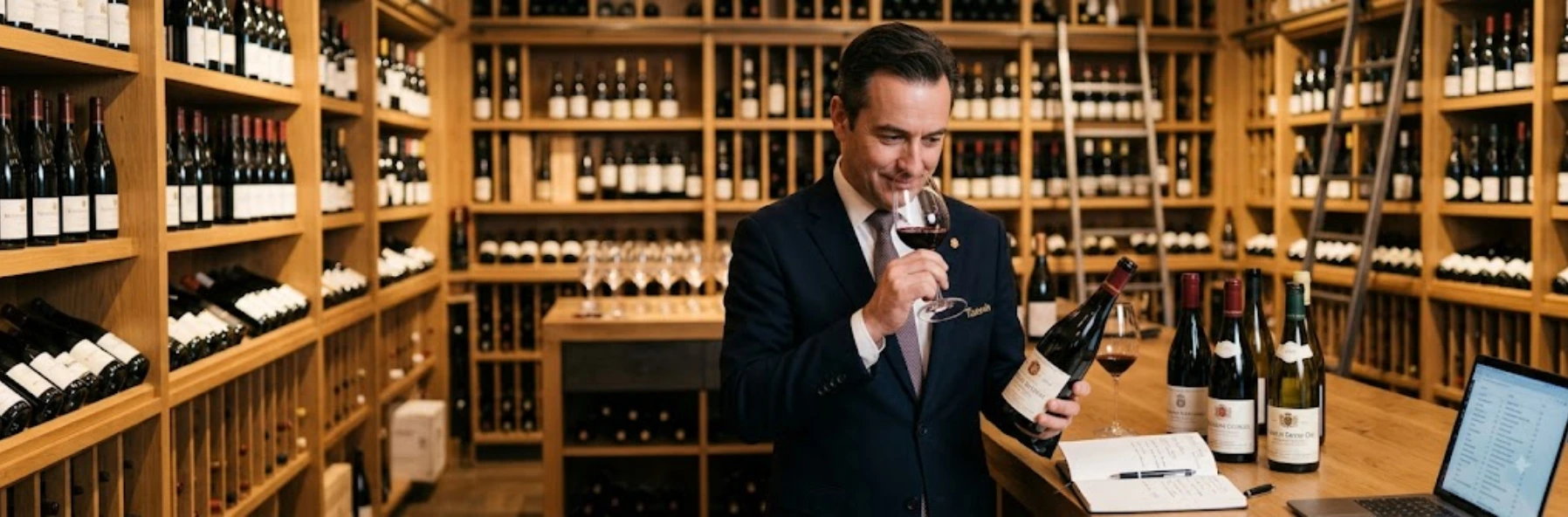
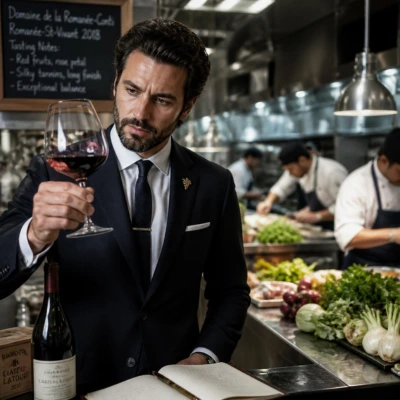
Fine dining encompasses starred restaurants, prestige tables and upmarket establishments that give a central place to wines & spirits in their offer. The sommelier or wine purchasing manager of these establishments is a key player in the wine industry: a prescriber of excellence, they directly influence the consumption choices of an affluent international clientele, and contribute to building the reputation of the producers they champion on their wine list.
Being listed in a starred restaurant is for a producer far more than a sale: it is a validation of their wine's quality by a recognised professional, an international showcase and a vehicle for notoriety among clientele who will subsequently purchase the same wine in their home country or on specialist platforms.
The relationship between great restaurants and great wines is as old as French gastronomy itself. From the 19th century, major Parisian restaurants such as the Grand Véfour and the Tour d'Argent built their reputation as much on their wine list as on their cuisine. La Tour d'Argent, whose cellar holds over 300,000 bottles, has become a global symbol of wine excellence in fine dining.
The creation of the Michelin Guide in 1900 and the rise of the star system in the 20th century profoundly structured relations between restaurants and producers. Being served in a three-Michelin-star restaurant has become the holy grail for any ambitious producer. Today, great sommeliers like Enrico Bernardo, Paolo Basso or Andreas Larsson are global figures who shape premium wine consumption trends on an international scale.
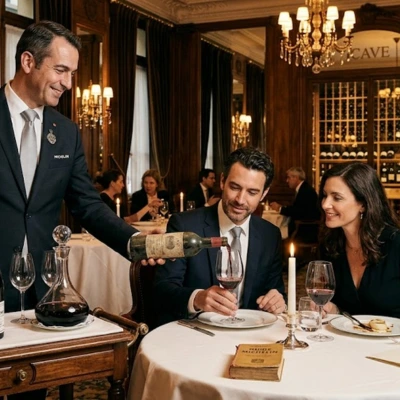
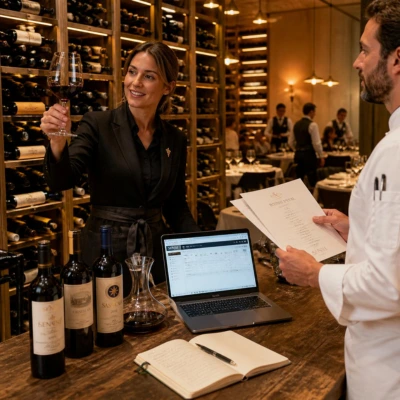
The gastronomic sommelier tastes and selects wines to join the list, negotiates purchase prices with producers and importers, manages the cellar and stocks, and trains floor teams in wine service. They design food and wine pairings in close collaboration with the chef, sometimes down to tasting menus where each dish is paired with a specific wine or even a different glass of wine by the glass.
In the most prestigious establishments, they organise themed evenings, vertical dinners around an estate or vintage, and welcome producers for in-room presentations. They maintain close relationships with winemakers, often built during estate visits and professional trade fairs. Their recommendation can transform the career of a small confidential producer by propelling them onto the international stage.
Over 3,500 Michelin-starred restaurants worldwide, each with a carefully crafted wine list
The average margin on wines in fine dining is 200 to 400% of the purchase price
A major Parisian restaurant can manage a cellar of 10,000 to 300,000 bottles and a purchasing budget of several million euros per year
International sommellerie competitions such as the ASI Best Sommelier of the World title generate worldwide visibility for wines championed by finalists
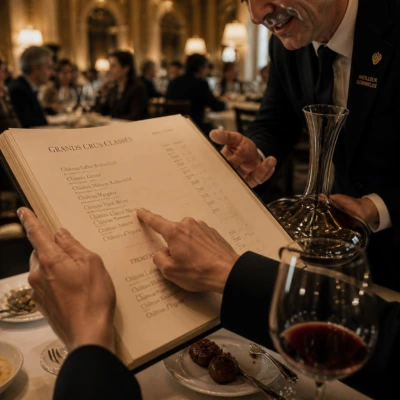
3 Michelin star restaurant: exceptional cellar, elaborate food and wine pairings, internationally-ranked sommelier
1-2 Michelin star restaurant: crafted wine list, quality producers, discovery-driven policy
Upmarket bistronomie: curated grower wine selection, accessible prices, natural and organic cellar
Palace hotel gastronomic restaurant: cellar integrated in the establishment, international and prestige list
Wine estate table d'hôtes: food and wine pairings around the producer's cuvées, immersive experience
Gastronomic private club: exclusive cellar reserved for members, grand crus and rare vintages
Upmarket world cuisine restaurant: pairings with little-known international wines, discovery approach
Gastronomic wine bar: selection of confidential producers, by-the-glass service, customer education
Auteur restaurant: short and curated list, exclusive wines, direct relationship with winemakers
Luxury cruise restaurant: international purchasing policy, significant volumes, global clientele
The rise of natural wines and small producers has profoundly transformed gastronomic wine lists. A new generation of sommeliers champions confidential grower wines, little-known appellations and forgotten grape varieties, overturning established rankings and offering unprecedented visibility to artisan producers who would never have accessed these tables through traditional channels.
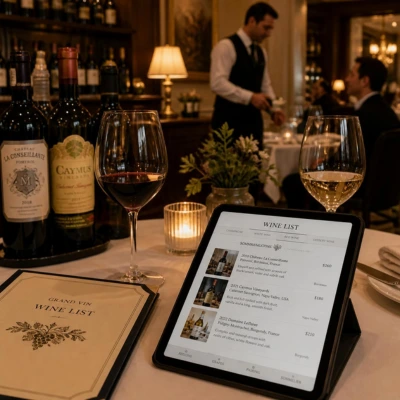
The digitalisation of the wine list is advancing rapidly. Tablets and QR codes are progressively replacing paper lists, allowing restaurants to offer cellars of several thousand references with detailed descriptions, photos and suggested pairings. Some establishments even offer personalised recommendations based on the client's preferences.
Finally, margin pressure remains a permanent challenge. Faced with the rise of e-commerce and price transparency on the internet, gastronomic clients are increasingly attentive to wine mark-ups. Restaurants that practise a transparent and reasonable pricing policy build loyalty among discerning clientele and contribute to developing an accessible wine culture.
Guy Savoy, Paris, France
Alain Ducasse au Plaza Athénée, Paris, France
La Tour d'Argent, Paris, France
El Celler de Can Roca, Girona, Spain
Osteria Francescana, Modena, Italy
The Fat Duck, Bray, United Kingdom
Eleven Madison Park, New York, USA
Epicure at Le Bristol, Paris, France
Noma, Copenhagen, Denmark
Central, Lima, Peru
Maison Pic, Valence, France
Paul Bocuse, Collonges-au-Mont-d'Or, France
Arzak, San Sebastián, Spain
Pavillon Ledoyen, Paris, France
Would you like your company to appear on this page? Listings are reserved for Pro Premium members of Wine BHM.
Join the selection of producers on the platform.
Join the network*Featured listings are reserved for Pro Premium members, subject to terms and conditions.