A wine & spirits importer is a commercial operator specialising in the purchase of wines, champagnes and spirits abroad for distribution on their national market. They play an essential role in the international value chain of wine & spirits: they open borders for producers, negotiate purchasing conditions, manage customs and tax formalities, and build the bridge between the world's vineyards and local buyers.
The importer is often the first ambassador of a producer on a foreign market. They carefully select the estates they represent, build long-term relationships with them and champion their wines to local wine merchants, restaurateurs, wholesalers and retailers. Their expertise in the local market, regulations and consumer tastes is indispensable.
The international wine trade is one of the oldest in the world. From Antiquity, the Phoenicians, Greeks and then Romans organised commercial networks to export their wines throughout the Mediterranean basin. In the Middle Ages, Bordeaux wines flooded England thanks to the political ties between Guyenne and the English Crown, creating the first organised import structures.
It was in the 19th century that the importer's profession truly became professionalised, with the development of railways, steam navigation and the first customs legislation. The great British, Dutch and Belgian trading houses structured sophisticated import networks that supplied their domestic markets with French, German and Spanish wines.
In the 20th century, the globalisation of the wine market radically transformed the profession. The rise of New World wines, trade liberalisation and the growing power of Asian markets created new opportunities and new challenges for importers worldwide.
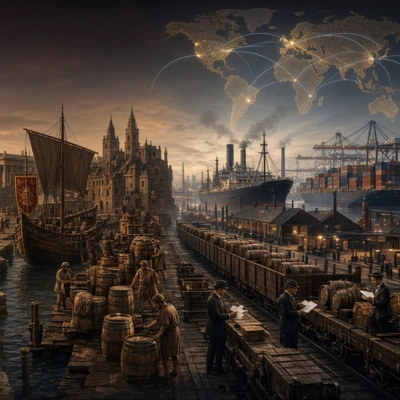
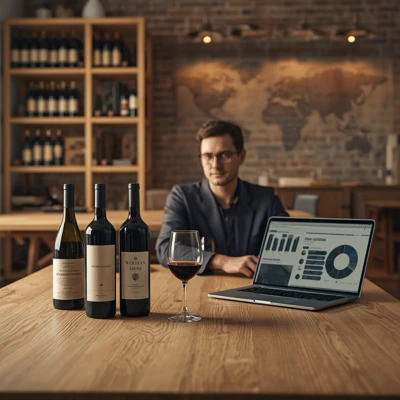
The importer spends a large part of their time sourcing and selecting the producers they wish to represent. This involves numerous trips to vineyards, regular tastings and constant monitoring of new trends and new talents.
Administrative and logistical management is an important part of the profession: customs declarations, excise duties, certificates of origin, import licences, stock management and organisation of the cold chain for sensitive wines. In each country, the regulations on alcohol importation are specific and demanding.
The commercial force is the lifeblood of the business: the importer must convince local buyers (wine merchants, restaurateurs, wholesalers, retailers) to list their wines rather than those of competitors. This involves presentations, professional tastings, participation in trade fairs and rigorous commercial follow-up.
According to data from the International Organisation of Vine and Wine (OIV):
110 million hectolitres of wine traded worldwide each year — OIV, 2022
The United States is the world's leading wine importer by value — OIV, 2022
The United Kingdom remains the second largest import market despite Brexit — OIV
Germany is the world's leading wine importer by volume — OIV, 2022
China and Hong Kong represent an import market of over $2 billion — OIV

Exclusive importer — represents a producer exclusively in a defined territory, close relationship and strong commitment
Multi-brand importer — distributes several non-competing producers, diversified portfolio by region or style
Specialist importer — focus on a specific region, country or style (natural wines, champagnes, Italian wines...)
Generalist importer — broad portfolio covering many origins and price categories
Agent importer — works on commission on behalf of foreign producers without buying stocks
Négociant importer — buys in bulk and packages under their own label or the producer's label
E-commerce importer — direct sales to consumers via a digital platform
State monopoly importer — Scandinavia, Canada, certain US states, sole entity legally authorised to import
Importers face increasing pressure on margins. The multiplication of players, price transparency on the internet and direct purchases by certain buyers from producers are compressing commercial margins. To survive and thrive, importers must create added value: precise selection, advisory expertise, impeccable logistics and effective communication.
Digitalisation is transforming the profession profoundly. Traditional physical trade fairs are losing ground to virtual tastings, online sourcing platforms and social networks. Importers who know how to use these tools to discover new producers and reach new buyers have a decisive competitive advantage.
Finally, geopolitical tensions and trade wars are weakening importers exposed to certain markets. The American tariffs on French and German wines in 2019-2021, or Chinese restrictions on Australian wines, reminded the entire industry of the vulnerability of this essential link in the chain.
Southern Glazer's Wine & Spirits — Miami, USA
Breakthru Beverage Group — Elmwood Park, USA
Charton-Hobbs — Toronto, Canada
Bibendum Wine — London, UK
Hatch Mansfield — Cookham, UK
Roberson Wine — London, UK
LCBO — Toronto, Canada
Systembolaget — Stockholm, Sweden
Vinmonopolet — Oslo, Norway
Dreyfus Ashby — New York, USA
Skurnik Wines — New York, USA
Kysela Pere et Fils — Winchester, USA
Vintus — Pleasantville, USA
MHW Ltd — New York, USA
Europvin — Bordeaux, France
OM Vino — Chicago, USA
Vinifera — Brussels, Belgium
Monica Wines — Milan, Italy
Kingsland Drinks — Manchester, UK
Epicurean Wines — Hong Kong
ASM Wines — Shanghai, China
Cellarmaster Wines — Sydney, Australia
Tempranillo Inc. — Portland, USA
Divine Wines — Bristol, UK
Vinatis Import — Strasbourg, France
Oddbins — London, UK
Would you like your company to appear on this page? Listings are reserved for Pro Premium members of Wine BHM.

Join the selection of producers on the platform.
Join the network*Featured listings are reserved for Pro Premium members, subject to terms and conditions.