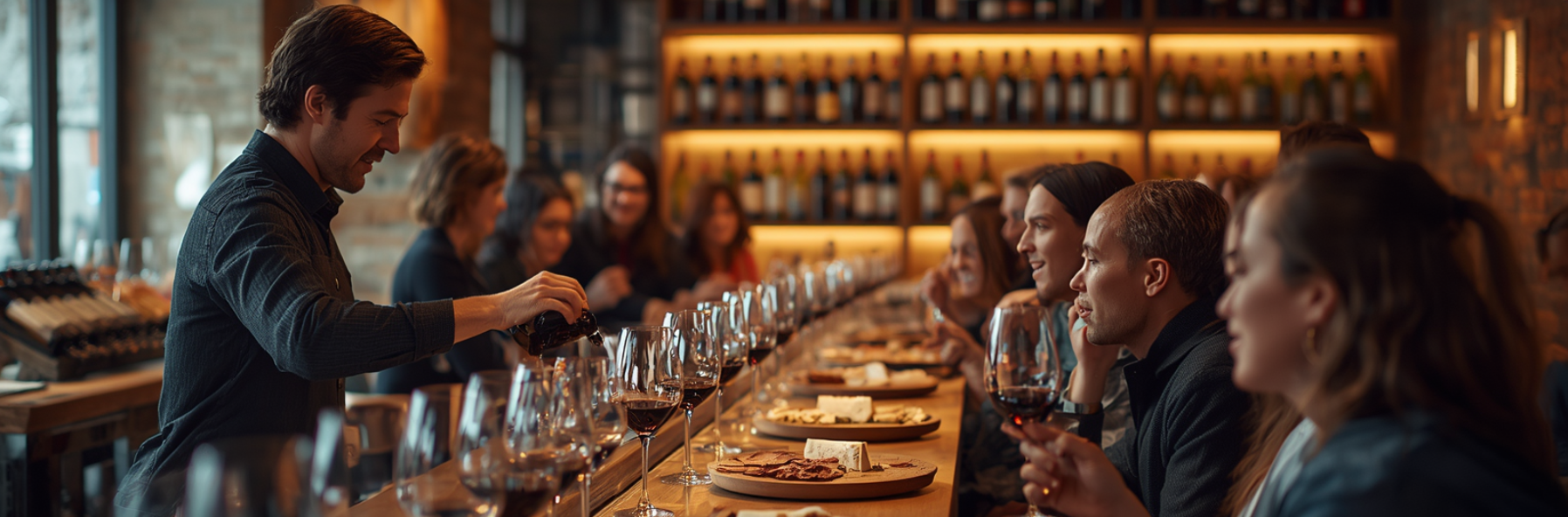
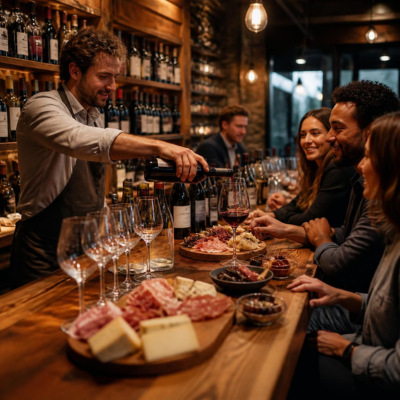
A wine bar is an establishment specialising in the sale and tasting of wines by the glass, offering a carefully curated selection by the owner or sommelier, often accompanied by charcuterie boards, cheeses and small gourmet dishes. Halfway between a wine shop and a restaurant, it provides a convivial and educational experience around wine, in a relaxed setting that democratises wine culture among a diverse public.
The wine bar has become an essential player in the wine industry. Its owner is a leading prescriber: they often champion confidential winemakers, emerging appellations and forgotten grape varieties, directly influencing the consumption choices of their loyal clientele. For a small producer, being listed in a recognised wine bar can be as prestigious as a star in a gastronomic guide.
The wine bar in its modern form was born in Paris in the 1970s and 1980s, in the Marais district and Saint-Germain-des-Prés. Pioneers like Willi's Wine Bar, opened in 1980 by Mark Williamson, and La Tartine in the Marais laid the foundations of a new format combining a curated selection, by-the-glass service and a relaxed atmosphere.
The natural wine movement of the 2000s and 2010s considerably energised the sector, with a new generation of wine bars such as Le Verre Volé, Septime La Cave and La Buvette in Paris, championing organic and natural winemakers with an openly committed positioning. This model has been exported to all major world cities, from New York to Tokyo, via London, Berlin and Melbourne.
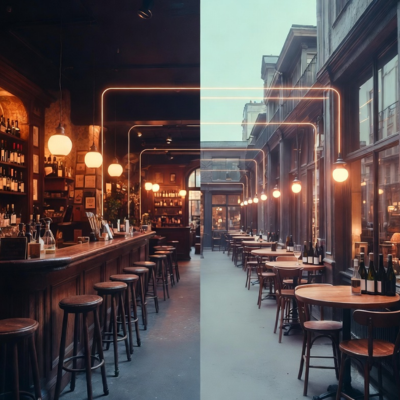
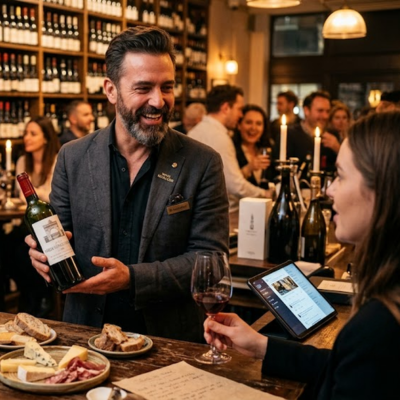
The wine bar owner selects their list directly from producers or through specialist importers, building a coherent offer that reflects their convictions and identity. They manage procurement, stocks, reference rotation and the glass list presentation. Communicating a passion for wine to clientele is at the heart of the profession: every glass is an opportunity for conversation, discovery and loyalty-building.
They regularly organise themed evenings, tastings with visiting winemakers, masterclasses and food and wine pairings to animate their establishment and develop their community. Social media presence has become essential for modern wine bars, which use Instagram and TikTok to share their discoveries and attract a curious and connected clientele.
Over 2,000 wine bars recorded in France, approximately 400 in Paris
The global wine bar market is growing steadily, driven by millennials' increasing interest in quality wines and authentic experiences
The average price of a glass of wine in a Parisian wine bar ranges from 5 to 15 euros, with exceptional cuvées exceeding 50 euros per glass
Over 60% of Parisian wine bars offer exclusively or predominantly natural, organic or biodynamic wines
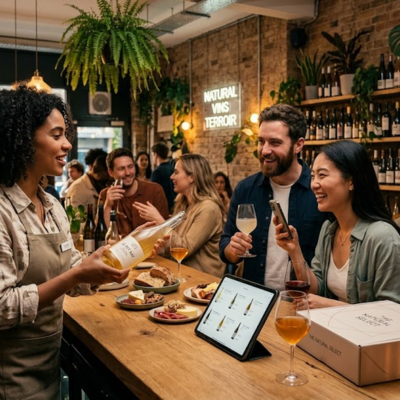
Natural wine bar: exclusively organic, biodynamic and natural selection, committed and trendy positioning
Classic wine bar: eclectic selection, great appellations and quality winemakers, curious clientele
Gastronomic wine bar: elaborate food and wine pairings, quality cuisine, prestige cellar
Vineyard wine bar: located in a wine region, showcase for local producers, wine tourism
Hybrid cave-bar: takeaway sales and on-site tasting, mixed business model
Hotel wine bar: integrated in a boutique hotel or palace, premium selection, international clientele
Airport wine bar: format adapted to travellers, fast service, local wine selection
Enobar: Italian term, traditional wine bar with local wines and tapas, Mediterranean culture
Connected wine bar: automatic wine machine, self-service, nitrogen preservation, wide by-the-glass selection
Pop-up wine bar: temporary, Christmas markets, wine festivals, seasonal events
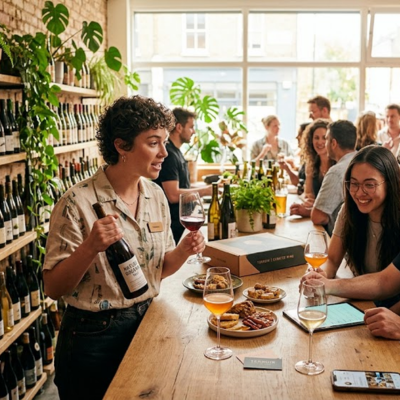
The natural wine movement continues to shape the wine bar market. A new generation of owners passionately champions wines without additives, from organic farming and artisan winemakers, creating an alternative wine culture to classic circuits. This positioning attracts a young, urban and committed clientele who consider wine choice as much an activist as a gastronomic act.
The digitalisation of the experience is transforming modern wine bars. Wine recognition applications, digital lists enriched with descriptions and suggested pairings, monthly subscriptions and online wine boxes extend the relationship between the wine bar and its community beyond the establishment's walls. Some wine bars have developed genuine media brands on social networks, with audiences of several tens of thousands of followers.
Finally, the hybrid business model is developing. More and more wine bars combine on-site tasting, takeaway sales, monthly subscriptions, estate visit organisation and e-commerce, diversifying revenue sources and strengthening relationships with their loyal customer community.
Willi's Wine Bar, Paris, France
Le Verre Volé, Paris, France
Septime La Cave, Paris, France
La Buvette, Paris, France
Le Caveau des Gourmands, Bordeaux, France
Enoteca Pinchiorri, Florence, Italy
The Bottle Ahead, London, United Kingdom
Cork Buzz Wine Studio, New York, USA
Vinothèque, San Francisco, California, USA
Vine Wine Bar, Melbourne, Australia
Weinbar Rutz, Berlin, Germany
El Bar de Nacho Manzano, Madrid, Spain
Nakamuraya Wine Bar, Tokyo, Japan
The Flying Winemaker, Hong Kong
Would you like your company to appear on this page? Listings are reserved for Pro Premium members of Wine BHM.
Join the selection of producers on the platform.
Join the network*Featured listings are reserved for Pro Premium members, subject to terms and conditions.