An ancient and historic vineyard
The Bordeaux vineyard, located in southwestern France, is one of the most famous and prestigious in the world. With more than 110,000 hectares of vines spread around three rivers—the Dordogne, the Garonne, and the Gironde—it is the largest AOC vineyard in France.
Each year, nearly 650 million bottles are produced, a large proportion of which are destined for export.
From ancient origins to the creation of a myth
Vine cultivation in Bordeaux dates back to Roman times, around the 1st century AD, in the region of Burdigala (now Bordeaux). The “Biturica” grape variety, well suited to the climate, marked the beginnings of viticulture.
After the fall of the Roman Empire, it was the monks and abbeys who preserved this know-how and developed wine cultivation in the region.
The medieval boom and the power of maritime trade
In the Middle Ages, Bordeaux became a major wine trading center thanks to its port and trade with England. The alliance between Eleanor of Aquitaine and Henry II Plantagenet promoted the export of Gironde wines, which were highly prized at the English court.
This period marked the golden age of the wine trade and established the international reputation of the Bordeaux vineyards.
From modernization to official recognition
In the 19th and 20th centuries, Bordeaux viticulture became more organized and modernized. The 1905 law established the concept of protected origin, while the 1935 decree-law founded the Appellation d'Origine Contrôlée (AOC), guaranteeing the authenticity and quality of wines.
The Bordeaux AOC was officially recognized in 1936, confirming the region's worldwide reputation.
An exceptional diversity of terroirs
The Bordeaux and Bordeaux Supérieur AOCs represent over 50% of the Gironde vineyards, covering approximately 60,000 hectares.
The soils are highly diverse: silica, quartz, limestone, clay, and marl, often covered with gravel, producing wines that are elegant, balanced, and complex in terms of aroma.
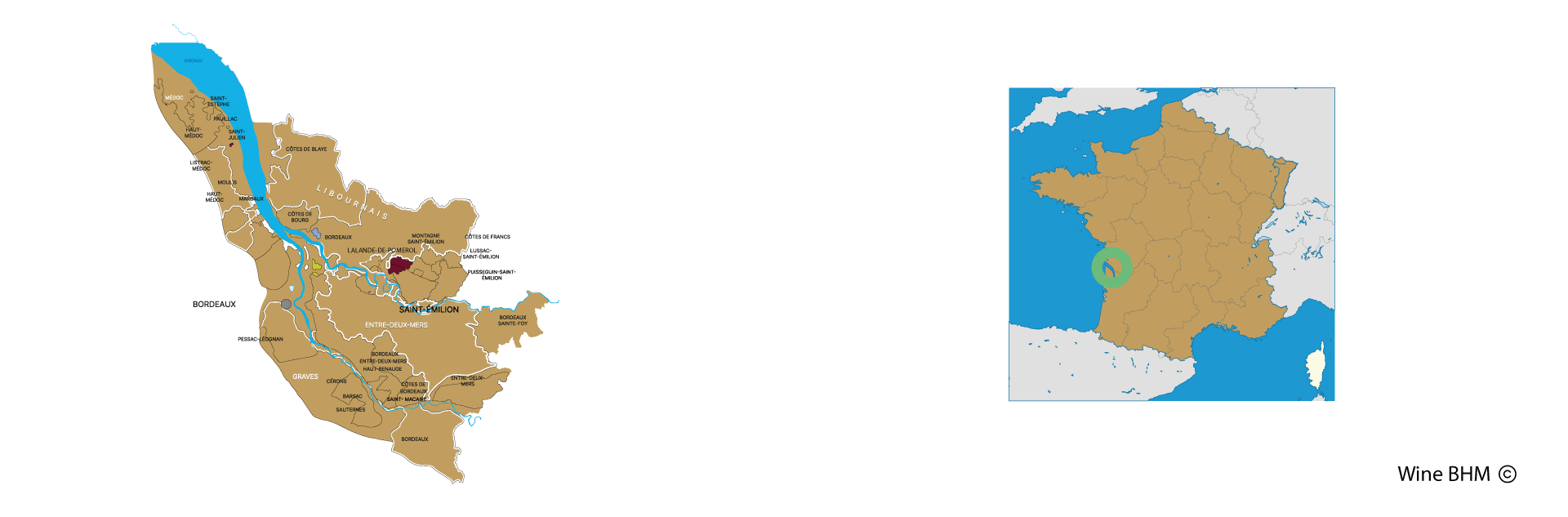
-Left Bank: Médoc and Graves
-Right Bank: Libournais, Blayais-Bourgeais
-Entre-deux-Mers: area between the Dordogne and Garonne rivers
Bordeaux is divided into six sub-regions:
The Médoc
A prestigious vineyard where the world's most famous châteaux are lined up, producing powerful and elegant red wines, made for aging.
Main appellations: Médoc, Haut-Médoc, Margaux, Pauillac, Saint-Julien, Saint-Estèphe, Listrac-Médoc, Moulis-en-Médoc.
Dominant grape varieties: Cabernet Sauvignon, Merlot, Cabernet Franc, Petit Verdot.
Graves & Sauternes
The historic cradle of Bordeaux wine, this terroir offers balanced red wines, refined dry whites, and the famous golden sweet wines of Sauternes.
Main appellations: Graves, Pessac-Léognan, Sauternes, Barsac.
Main grape varieties: Cabernet Sauvignon, Merlot, Sauvignon Blanc, Sémillon.
Entre-Deux-Mers
Between the Garonne and Dordogne rivers, this sea of hills produces fresh and aromatic dry white wines in a setting of medieval bastides and gentle landscapes.
Main appellations: Entre-Deux-Mers, Cadillac, Loupiac, Sainte-Croix-du-Mont, Premières Côtes de Bordeaux. Main grape varieties: Sauvignon Blanc, Sémillon, Muscadelle.
Saint-Emilion – Pomerol – Fronsac
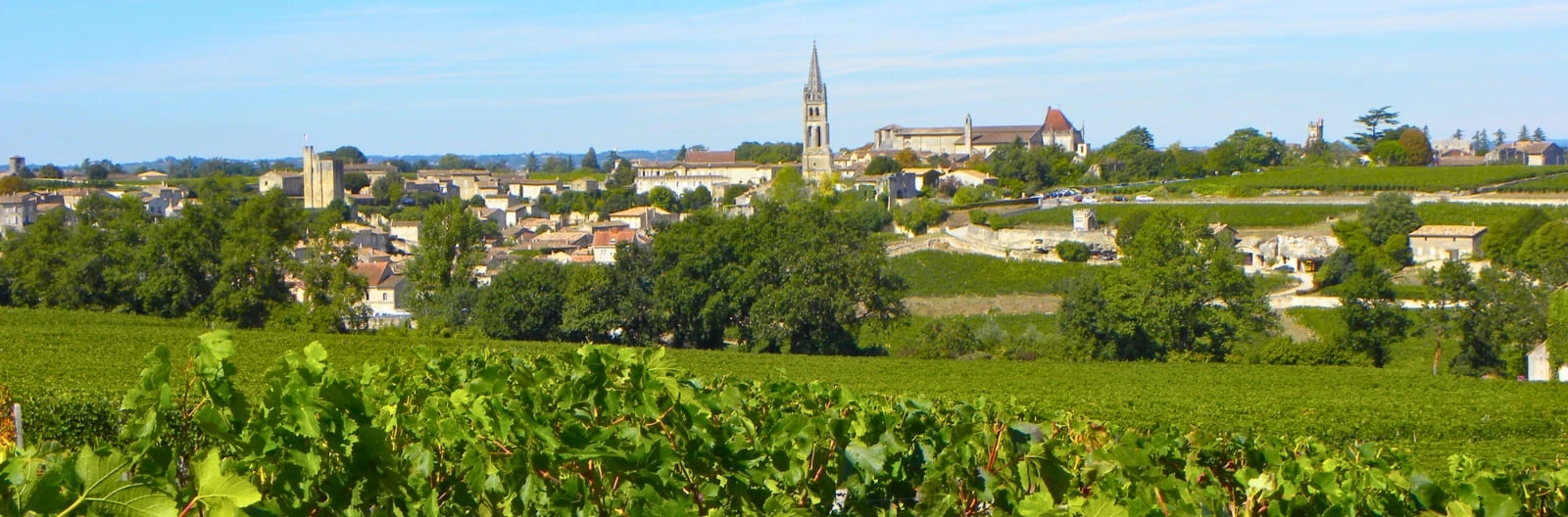
On the right bank, the stony hillsides and classified villages produce velvety, deep wines dominated by Merlot and recognized throughout the world.
Main appellations: Saint-Émilion, Saint-Émilion Grand Cru, Pomerol, Lalande-de-Pomerol, Fronsac, Canon-Fronsac. Dominant grape varieties: Merlot, Cabernet Franc, Cabernet Sauvignon.
Blaye & Bourg
Overlooking the Gironde estuary, these little-known vineyards charm visitors with their peaceful landscapes and their frank, expressive, and accessible red wines.
Main appellations: Blaye-Côtes de Bordeaux, Côtes-de-Bourg. Main grape varieties: Merlot, Cabernet Sauvignon, Malbec.
The Bordeaux Intra-Metropolitan Vineyard
Around the city, a few estates perpetuate the winegrowing tradition in the heart of the urban area, combining urban heritage and the spirit of wine.
Main appellations: Bordeaux, Bordeaux Supérieur (urban estates of Pessac, Mérignac, Eysines). Main grape varieties: Merlot, Cabernet Sauvignon, Sauvignon Blanc.
Climate
The temperate oceanic climate is softened by the Atlantic influence: mild winters, moderate summers, regulating humidity, and day/night variations conducive to slow grape ripening. These conditions promote freshness, aromatic complexity, and balanced structure in the wines.
A world-renowned vineyard of excellence
Today, Bordeaux remains a global benchmark for wine, with more than 6,000 winegrowers, a dense network of merchants, brokers, and cooperatives, and production focused on excellence, innovation, and sustainability.
The iconic grape varieties
Reds (frequently blended): Merlot, Cabernet Sauvignon, Cabernet Franc, with possible additions of Petit Verdot and Malbec. Merlot brings color, suppleness, and red fruit flavors; Cabernet Sauvignon brings structure, tannins, and black fruit flavors; Cabernet Franc brings freshness and complexity.
Whites: Sauvignon Blanc and Sémillon (sometimes Muscadelle, Colombard). Sauvignon offers acidity, minerality, and citrus; Sémillon brings roundness and richness (especially in sweet/liqueur wines) with notes of apricot and honey; Muscadelle adds musky and floral notes.
Appellations and wine hierarchy
The Bordeaux vineyards have numerous AOCs, from grands crus classés to more accessible appellations. The Bordeaux and Bordeaux Supérieur AOCs cover red, white, rosé (and clairet) wines, with stricter quality criteria for Bordeaux Supérieur (yields, aging).
- Regional appellations :
- Bordeaux
• Type: Still wine
• Color: Red, White, Rosé
• Style: Dry to sweet
• Description: Regional appellation covering the entire vineyard, producing balanced and accessible wines.
Bordeaux Supérieur
• Type: Still wine
• Color: Red, White
• Style: Dry to sweet
• Description: Stricter selection than AOC Bordeaux, with limited yields and better aromatic concentration.
Bordeaux Rosé
• Type: Still wine
• Color: Rosé
• Style: Dry
• Description: Fresh and fruity rosés, produced throughout the vineyard, perfect for summer drinking.
Bordeaux Clairet
• Type: Still wine
• Color: Dark rosé
• Style: Dry
• Description: A wine halfway between rosé and light red, typical of Bordeaux, with intense fruitiness and suppleness.
Bordeaux Moelleux
• Type: Still wine
• Color: White
• Style: Sweet
• Description: Appellation dedicated to soft, sweet white wines made mainly from Sémillon grapes.
Crémant de Bordeaux
• Type: Sparkling wine
• Color: White, Rosé
• Style: Brut to semi-dry
• Description: Sparkling wines made using traditional methods, offering finesse and elegance.
Côtes de Bordeaux appellations :
Blaye
• Type: Still wine
• Color: Red, White
• Style: Dry
• Description: Appellation on the right bank, producing supple reds and lively, aromatic whites.
Côtes de Bourg
• Type: Still wine
• Color: Red, White
• Style: Dry
• Description: Round, generous wines dominated by Merlot, often marked by fruity and spicy notes.
Castillon Côtes de Bordeaux
• Type: Still wine
• Color: Red
• Style: Dry
• Description: Elegant wines from the right bank, similar in style to Saint-Émilion, made from Merlot and Cabernet Franc.
Francs Côtes de Bordeaux
• Type: Still wine
• Color: Red, White
• Style: Dry
• Description: Small, little-known appellation producing supple red wines and floral whites.
Cadillac Côtes de Bordeaux
• Type: Still wine
• Color: Red
• Style: Dry
• Description: Wines from the southern slopes, powerful and fruity, dominated by Merlot.
Sainte-Foy Côtes de Bordeaux
• Type: Still wine
• Color: Red, White
• Style: Dry to sweet
• Description: A dual-faceted appellation producing elegant reds and balanced sweet whites.
- Appellations of the Libournais region :
Saint-Émilion
• Type: Still wine
• Color: Red
• Style: Dry
• Description: Famous appellation on the right bank, renowned for its velvety Merlot-based wines.
Saint-Émilion Grand Cru
• Type: Still wine
• Color: Red
• Style: Dry
• Description: More stringent selection, often aged in barrels, producing complex wines with good aging potential.
Lussac Saint-Émilion
• Type: Still wine
• Color: Red
• Style: Dry
• Description: Satellite appellation offering supple, harmonious, and generous wines.
Puisseguin Saint-Émilion
• Type: Still wine
• Color: Red
• Style: Dry
• Description: Full-bodied wines, marked by a beautiful structure and aromas of ripe fruit.
Saint-Georges Saint-Émilion
• Type: Still wine
• Color: Red
• Style: Dry
• Description: Smaller satellite appellation, renowned for its balanced and refined wines.
Montagne Saint-Émilion
• Type: Still wine
• Color: Red
• Style: Dry
• Description: Supple and charming wines, dominated by Merlot, with a fruity and generous bouquet.
Pomerol
• Type: Still wine
• Color: Red
• Style: Dry
• Description: A prestigious appellation producing velvety, dense, and opulent wines, centered on Merlot.
Lalande-de-Pomerol
• Type: Still wine
• Color: Red
• Style: Dry
• Description: Neighboring Pomerol, offering round, silky, and elegant wines.
Fronsac
• Type: Still wine
• Color: Red
• Style: Dry
• Description: Full-bodied and powerful wines with a strong character and high aging potential.
Canon-Fronsac
• Type: Still wine
• Color: Red
• Style: Dry
• Description: Appellation from clay-limestone hillsides, producing full-bodied, aromatic wines.
- Médoc appellations :
Médoc
• Type: Still wine
• Color: Red
• Style: Dry
• Description: Appellation covering the northern part of the peninsula, offering frank and fruity wines.
Haut-Médoc
• Type: Still wine
• Color: Red
• Style: Dry
• Description: Structured and elegant wines, dominated by Cabernet Sauvignon.
Margaux
• Type: Still wine
• Color: Red
• Style: Dry
• Description: An iconic appellation, known for its wines of exceptional aromatic finesse.
Moulis-en-Médoc
• Type: Still wine
• Color: Red
• Style: Dry
• Description: Balanced and supple wines, often offering excellent value for money.
Listrac-Médoc
• Type: Still wine
• Color: Red
• Style: Dry
• Description: Powerful, structured wines with great aging potential.
Saint-Julien
• Type: Still wine
• Color: Red
• Style: Dry
• Description: Harmonious, distinguished wines combining structure, elegance, and longevity.
Pauillac
• Type: Still wine
• Color: Red
• Style: Dry
• Description: A legendary appellation producing powerful and complex wines, dominated by Cabernet Sauvignon.
Saint-Estèphe
• Type: Still wine
• Color: Red
• Style: Dry
• Description: Dense and robust wines, marked by a beautiful freshness and great aging potential.
- Graves and Sauternes appellations
Graves
• Type: Still wine
• Color: Red, White
• Style: Dry
• Description: A historic appellation combining elegant reds and fresh dry whites.
Graves Supérieures
• Type: Still wine
• Color: White
• Style: Sweet
• Description: Sweet white wines made from late harvest grapes, with notes of honey and flowers.
Pessac-Léognan
• Type: Still wine
• Color: Red, White
• Style: Dry
• Description: Prestigious appellation producing wines of great complexity, symbols of the modern Bordeaux style.
Barsac
• Type: Still wine
• Color: White
• Style: Sweet
• Description: Refined sweet wines produced from botrytized Sémillon grapes, often grown near Sauternes.
Sauternes
• Type: Still wine
• Color: White
• Style: Sweet
• Description: A legendary appellation, producing the world's most famous sweet wines.
Cérons
• Type: Still wine
• Color: White
• Style: Medium-sweet to sweet
• Description: A small, little-known appellation, producing elegant and harmonious sweet wines.
- Entre-Deux-Mers appellations :
Entre-Deux-Mers
• Type: Still wine
• Color: White
• Style: Dry
• Description: An iconic appellation for fresh, citrusy white wines made from Sauvignon Blanc.
Graves de Vayres
• Type: Still wine
• Color: Red, White
• Style: Dry
• Description: A little-known appellation producing supple, rounded wines, located at the junction of Graves and Entre-Deux-Mers.
Loupiac
• Type: Still wine
• Color: White
• Style: Sweet
• Description: Sweet, fragrant wines, often compared to those of Sauternes but more accessible.
Sainte-Croix-du-Mont
• Type: Still wine
• Color: White
• Style: Sweet
• Description: Smooth, balanced wines from the same limestone terroir as Sauternes.
Cadillac
• Type: Still wine
• Color: White
• Style: Sweet
• Description: A prestigious appellation producing complex, golden sweet wines rich in candied fruit aromas.
Main red grape varieties of Bordeaux:
Merlot
Cabernet Sauvignon
Cabernet Franc
Main white grapes of Bordeaux:
Sémillon
Sauvignon Blanc
Muscadelle
Authorized complementary grapes:
Sauvignon Gris
Ugni Blanc
Colombard
Merlot Blanc
Authorized complementary grape varieties:
Petit Verdot
Malbec (or Côt)
Carménère
Production and market share
The region produces around 4.8 million hectoliters per year. Red wine dominates, but dry whites, sweet/liqueur wines (Sauternes, Barsac) and rosés (Bordeaux rosé) complete the range. The share of rosés remains moderate but is grwing.
Terroir and climate: a major influence
The Bordeaux terroir combines varied subsoils (limestone, clay, marl, gravel) and oceanic influence. Air humidity plays a key role in botrytization in sweet wine areas (Sauternes), promoting the development of Botrytis cinerea.
Sustainability and viticultural practices
The vineyard is facing climate challenges (global warming, frost events) and is moving towards more sustainable practices: increased conversion to organic/biodynamic farming, plot management, reduction of inputs, and adaptation of technical procedures.
Would you like to register your estate or promote it? Contact us
WHAT TO DO – WHAT TO VISIT
WINE ROUTE
Between the Garonne, Dordogne, and Gironde estuary, the Bordeaux wine route invites you on a journey that is both sensory and cultural. This vast vineyard, renowned throughout the world, is home to listed landscapes, majestic châteaux, and a thousand-year-old wine-growing tradition. Each itinerary reveals a different facet of Bordeaux: the power of the Médoc, the elegance of the Graves, the gentleness of the Sauternes, or the serenity of the Entre-deux-Mers.
Visitors can follow several official tours offered by Bordeaux Tourism: getaways by car, bike, or boat, punctuated by tastings, meetings with winemakers, and stops in listed villages. The estates open their doors to share their expertise and offer immersive experiences in the heart of the vineyards.
CHATEAU PAPE CLEMENT – PESSAC LEOGNAN
Nestled on the outskirts of Bordeaux, Château Pape Clément is one of the oldest wine estates in the region, with a history dating back to the 13th century. Its name pays tribute to Pope Clement V, who once owned the estate. The tour begins in the heart of the vineyards, continues in the modern cellars, and ends in a refined tasting room where you can savor the estate's elegant wines. The site combines tradition and innovation, with its pale stone walls, contemporary glass roofs, and peaceful atmosphere. The experience can be complemented by wine workshops or a night in the château's suite, a true escape combining luxury and heritage.
SAINT-ÉMILION
Perched on its hills, Saint-Émilion is a medieval gem listed as a UNESCO World Heritage Site. Its cobbled streets, monolithic churches, and underground cellars tell a thousand-year-old story of wine. Each visit combines culture and tasting, and the panoramic views of the vineyards are breathtakingly beautiful.
MÉDOC
North of Bordeaux, the Médoc unfurls its roads lined with vineyards and prestigious châteaux. Here, wine lovers discover the soul of the grands crus classés of 1855: Margaux, Pauillac, Saint-Julien, and Saint-Estèphe. Many estates offer guided tours combining architecture, contemporary art, and wine tasting.
HISTORIC VILLAGES TO DISCOVER
In the Bordeaux area, the wine-growing villages reflect the French art of living. In Cadillac, Rions, and Loupiac, visitors can stroll through medieval streets before discovering the sweet white wines of Entre-deux-Mers. In Blaye, the Vauban citadel overlooks the estuary, while in Bourg-sur-Gironde, 18th-century facades recall the river's merchant past.
BORDEAUX
The world capital of wine, Bordeaux seduces with its refinement and its UNESCO-listed heritage. Between the majestic Place de la Bourse, the Miroir d'eau and the lively quays, the city combines modernity and classical heritage. The Cité du Vin, a contemporary emblem, offers a sensory immersion into the world of wine through exhibitions, workshops and tastings. The Chartrons and Capucins markets invite you to savor local products in a friendly atmosphere.
CHATEAU LA GAFFELIERE – SAINT EMILION
Located at the foot of the famous medieval village of Saint-Émilion, a UNESCO World Heritage Site, Château La Gaffelière perfectly embodies the elegance and precision of the great wines of the limestone terroir. Owned by the Malet Roquefort family for several centuries, this estate combines heritage and modernity. The tour provides an insight into the work involved in vineyard management, winemaking, and barrel aging in spectacular cellars. The tasting that concludes the tour reveals the finesse and depth of Saint-Émilion wines, renowned for their velvety texture and aging potential.
CHATEAU MARQUIS DE TERME – MARGAUX
In the heart of the Margaux appellation, this 1855 Grand Cru Classé offers a complete immersion in the Médoc lifestyle. Combining modernity and classic charm, the château offers guided tours enriched with tastings, “Grands Crus” workshops, and even a gourmet restaurant on the estate. The tour takes visitors through the vineyards, the vat room, and the barrel cellars, before ending with a glass of wine in the magnificent garden. The estate stands out for its friendly and sensory approach to wine, ideal for both novices and connoisseurs. The restaurant “Au Marquis de Terme,” run by chef Grégory Coutanceau, is perfect for a lunch combining fine dining and wine.
SAINT ANDRE CATHEDRAL & PEY BERLAND TOWER
Majestic and steeped in history, Saint-André Cathedral is a jewel of Bordeaux Gothic architecture. It was here that Eleanor of Aquitaine married Louis VII before becoming Queen of England. As you step through its heavy carved doors, you will discover an impressive nave, luminous stained-glass windows, and a rare spiritual atmosphere. Right next door, the Pey-Berland Tower, built independently to protect the cathedral from the vibrations of the bell, offers an exceptional panoramic view of the entire city. An unforgettable climb, especially at sunset.
SAINT MICHEL BASILICA
Dominating the lively working-class neighborhood of the same name, Saint Michel Basilica impresses visitors with its slender 114-meter bell tower. Its flamboyant Gothic architecture, colorful stained glass windows, and monumental organ make it a mystical and artistic place. At its feet, the square comes alive every morning with a bustling market filled with the scent of spices and antique objects.
BASILICA OF SAINT SEURIN
More discreet but deeply spiritual, the Basilica of Saint Seurin is one of the oldest sanctuaries in Bordeaux. Built on an ancient Gallo-Roman necropolis, it houses fascinating archaeological crypts and exceptional religious furnishings. Its peaceful, almost timeless atmosphere makes it an essential stop for pilgrims on the Way of St. James.
PLACE DE LA BOURSE & MIROIR D'EAU
A masterpiece of 18th-century architecture, the Place de la Bourse is one of the symbols of Bordeaux. Its facades are reflected in the famous Miroir d'eau, the largest water mirror in the world. This place embodies classic French elegance: harmony, light, and art de vivre. Day and night, the ballet of reflections and mist creates a unique poetic atmosphere. A must-see: in the evening, when the facades light up and the mirror becomes a living spectacle.
THE BIG BELL
A medieval remnant of the old city gate, the Big Bell is a powerful symbol of historic Bordeaux. Once used to signal the grape harvest or sound the alarm, its bell, named Armande-Louise, weighs over 7 tons. Its medieval architecture, with two towers connected by an arch, is reminiscent of the fortified Bordeaux of the 15th century.
THE GRAND THEATER OF BORDEAUX
An 18th-century masterpiece by Victor Louis, the Grand Theater is a jewel of neoclassical style. Its façade, adorned with twelve statues of ancient muses and goddesses, is emblematic of Bordeaux's splendor. Inside, gilding, blue velvet, and crystal chandeliers create a sumptuous setting. It is the cultural heart of the city, hosting prestigious operas, ballets, and concerts throughout the year.
MUSEE D'AQUITAINE
This museum traces the history of Bordeaux and its region from prehistory to the present day. Its collections cover the Gallo-Roman period, the slave trade, maritime commerce, and the cultural influence of the 18th century. It is a fascinating place to understand the richness and complexity of Bordeaux's history.
OLD BORDEAUX
Strolling through Old Bordeaux is like traveling back in time. Its cobbled streets, golden facades, and lively little squares offer a unique atmosphere. The Saint-Pierre district embodies the soul of the city, with its restaurants, galleries, and local life.
PONT DE PIERR
Built under Napoleon I, the Pont de Pierre was the first bridge to connect the two banks of the Garonne. With its 17 arches symbolizing the letters of “Napoleon Bonaparte,” it offers a superb view of the quays and the city. Now reserved for pedestrians and cyclists, it is ideal for a stroll at sunset.
LA CITE DU VIN
A true contemporary icon, the Cité du Vin is an immersive museum dedicated to wine culture around the world. Its bold architecture is reminiscent of the movement of wine in a glass. Inside, sensory experiences, interactive exhibitions, and tastings offer an exciting and fun discovery. Don't miss the chance to climb up to the belvedere to enjoy a glass of wine overlooking the Garonne River.
NATURE AND HERITAGE
The Bordeaux region offers abundant nature, ideal for relaxation. The banks of the Garonne River and the wine trails are perfect for hiking or cycling. Parks such as Majolan and Parc Floral offer peaceful havens in the heart of the city. Nearby, the Bassin d'Arcachon captivates visitors with its light and seascapes, perfect for a getaway after exploring the vineyards.
HOTELS AND HOUSES IN THE HEART OF THE VINEYARDS
Sleeping in the heart of the vineyards is an unforgettable experience. Many charming estates and houses welcome visitors for an exceptional stay: rooms with views of the vineyards, gourmet dining, spas, and private tastings. Among the most notable are Les Sources de Caudalie, Château de Sacy, and elegant guest houses in Saint-Émilion and Margaux.
LOCAL EVENTS
Throughout the year, the region lives to the rhythm of its festivals and wine-growing seasons. Every summer, Bordeaux Fête le Vin brings together wine lovers and professionals on the quays, while the Fête des Vendanges de Saint-Émilion celebrates the harvest in a festive and traditional atmosphere. Gourmet markets, concerts, and exhibitions punctuate the cultural life of the wine-growing villages.
HISTORY AND TECHNIQUE OF THE VINEYARD
The Bordeaux vineyard dates back to Roman times, when vines were first introduced to the Burdigala region. In the Middle Ages, trade with England contributed to its international renown. The following centuries saw the development of the great châteaux, official classifications, and the rise of the wine trade. Today, more than 57 appellations and thousands of producers continue this tradition, combining innovation with respect for the terroir.
GASTRONOMIE ET RESTAURANT
Join the selection of producers on the platform.
Join the network*Featured listings are reserved for Pro Premium members, subject to terms and conditions.