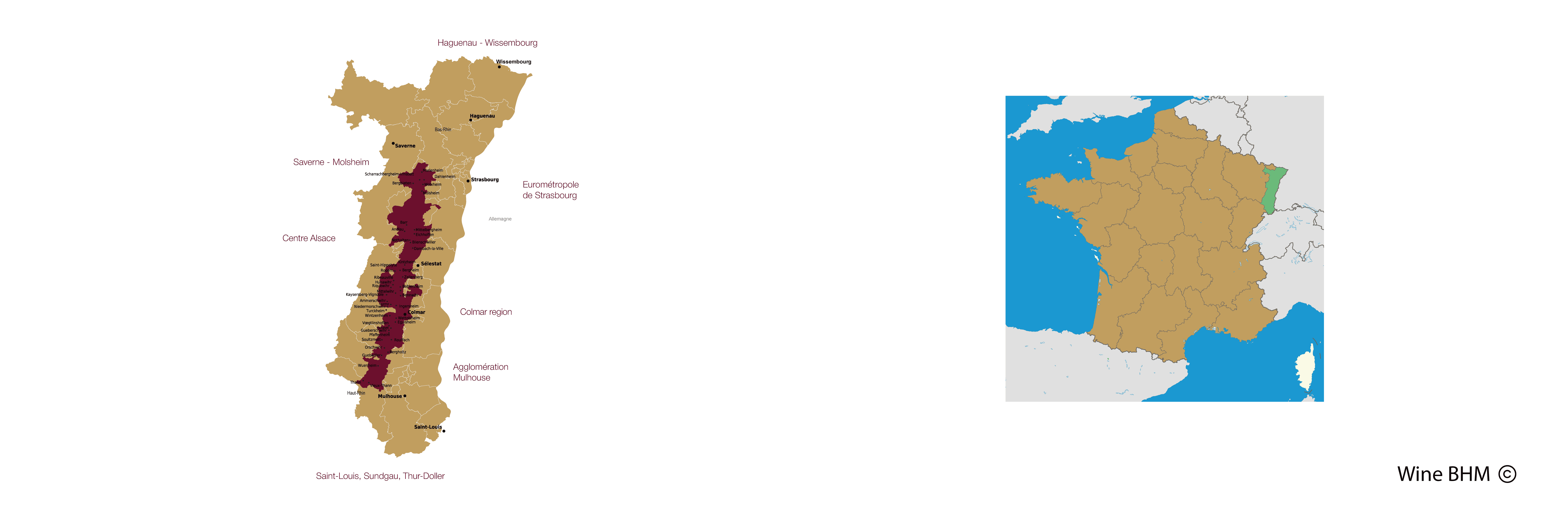
Alsace, an iconic wine-growing region in northern France covering 15,606 hectares, mainly produces white wines thanks to its dry, sunny microclimate. It is France's largest producer of white wines, with typical grape varieties such as Riesling, Gewurztraminer, Sylvaner, Pinot Gris, and Muscat. The AOP Alsace and the 51 Grands Crus express the diversity of the terroirs, while the region stands out for its organic and biodynamic farming practices, becoming a pioneer in this field since the 1960s. Wine tourism, with the 170 km Wine Route, attracts millions of visitors every year. Pinot Noir production is being modernized, strengthening the image of Alsatian red wines. These developments are contributing to the region's growing reputation.
Stretching across the slopes of the Vosges mountains, the Alsace region has a long history of wine production. The history of viticulture in Alsace probably began in Roman times, but it was during the Middle Ages that it really flourished, thanks to the monastic orders. In the 16th century, the wine-growing region prospered and expanded, although the Thirty Years' War (1618-1648) destroyed a large part of the vineyards. Located near the current German border (along the Rhine), the region was a territory of disputes and political conflicts for centuries. Annexed by France in the 17th century, Alsace was claimed by the new German Empire in 1871 following France's defeat in the war of 1870. Alsace thus became German, and the Prussian Empire prioritized volume production, which led to a decline in viticulture, exacerbated by diseases such as phylloxera. After the Great War (World War I), the region became French again with the armistice of November 11, 1918. The region's return to France led to the re-creation of the "Vins d'Alsace" appellation until Alsace became German again with the occupation of the Reich's armies in May 1940. Today, Alsace is part of France, but Germanic influence is still present. Since 1962, with the creation of the Alsace AOC, followed by Crémant d'Alsace in 1976 and the establishment of the Alsace Grand Cru appellation in 1983, the AOCs have become very diverse, promoting the terroirs. Alsace is distinguished by its geological diversity, with mountains, hills, and plains that influence the quality of the wines. This variety of soils gives each grape variety unique characteristics, enriching the diversity of Alsatian wines.
Wines from Alsace are classified according to the quality of their terroir and the restrictive production rules that apply to them. Alsace has 53 appellations, including AOP Alsace, AOP Alsace Grands Crus, and AOP Crémant d'Alsace, accompanied by various designations and grape varieties. To clarify, here is a breakdown of this classification, which is unique in France. For a broader overview, see our page on the French appellation system.
Created in 1962, this appellation represents 74% of total Alsatian production, 92% of which is white wine. The first level in the Alsace wine hierarchy, it can, however, be accompanied by designations revealing several quality criteria:
The grape variety: if a wine is made from a single grape variety (Sylvaner, Pinot Blanc, Riesling, Muscat, Pinot Gris, Gewurztraminer, Pinot Noir, or Savagnin), this may appear on the label. In the case of a blend, the term "Edelzwicker" may be used, with "Zwicker" meaning "blend" and 'Edel' referring to the presence of noble grape varieties. This should be distinguished from the term "Gentil," which indicates a superior quality blend consisting of at least 50% Riesling, Muscat, Pinot Gris, and/or Gewurztraminer.
Geographical location: a municipal geographical designation or a place name may be added to the AOC name. These indicate specific and restrictive production rules. Eleven municipalities are covered by the municipal designation. For place names, the rules are even stricter. These are truly unique terroirs that give the wine its fruitiness and minerality.
These 51 terroirs — which have been defined according to geological and climatic criteria — are the best in the region. They combine unique microclimates, complex soils, and often impressive slopes. Created in 1975, they were actually inspired by the historic centers of production and were only recognized as appellations in 2011. They account for 4% of total production.
Produced by secondary fermentation, these sparkling wines seduce with their liveliness and delicacy. They obtained appellation status in 1975 and today have a significant presence in the region, accounting for 21% of production. Generally made from Pinot Blanc, they can also benefit from the aromas of Pinot Gris, Pinot Noir, Riesling, and Chardonnay.
Complementing the appellations on the label, these terms symbolize some of the strictest production methods among AOPs in general. These exceptional wines are voluptuous and rich, with a complex aromatic palette. "Late Harvest" refers to Gewurztraminer, Pinot Gris, Riesling, or Muscat grapes that have been harvested when overripe. This implies the presence of noble rot (or Botrytis Cinerea) and high concentration. "Sélection de Grains Nobles" implies the practice of successive sorting of these overripe grapes. The identity of the grape variety is more discreet and the wines have an impressive length.
Unlike other French wine regions, Alsace is the only French wine region to focus on varietal wines, naming its wines after the grape varieties used to make them. The labels, typically similar to German labels, therefore highlight the grape variety. There are seven grape varieties in Alsace, but the most popular are Riesling, Sylvaner, Gewurztraminer, Muscat, Pinot Blanc, Pinot Gris, and Pinot Noir. Auxerrois is also planted and forms the basis of many sparkling Crémants d'Alsace. Three of these varieties are therefore ubiquitous in terms of widespread production across Alsatian wine estates.
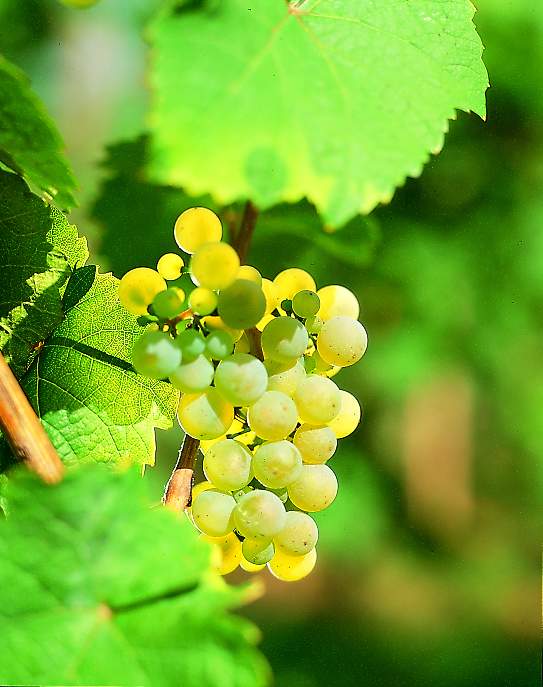
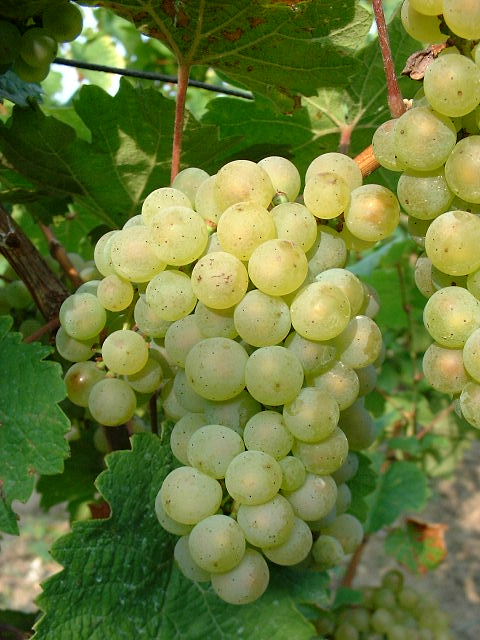
The Riesling grape variety is one of the latest to ripen in Alsace, along with Sylvaner. It is distinguished by its ability to reach maturity at low temperatures, which allows it to develop very unique organoleptic qualities. It produces fine wines with strong character, both elegant and fruity, with body and a very refined acidity. Harvested late, this grape variety offers the possibility of producing wines that are more or less sweet, but always very harmonious. Riesling remains the favorite wine of Alsatians, who like to pair it with their region's most typical dish: sauerkraut. It also goes perfectly with seafood.
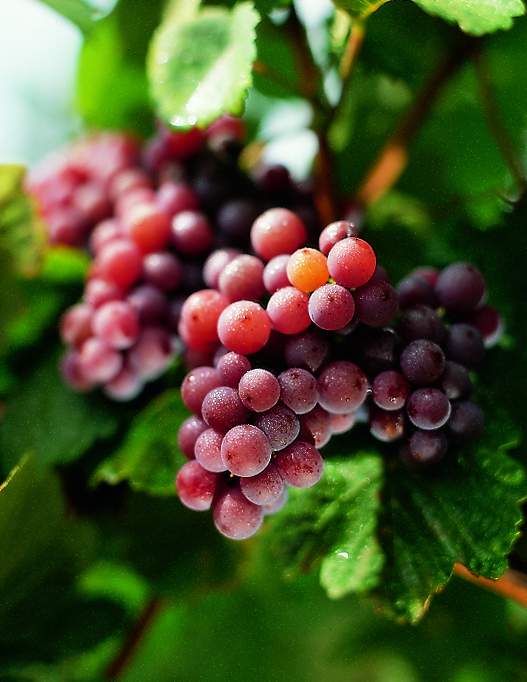
Formerly known as Traminer, Gewurztraminer is an early-ripening variety, easily recognizable by its small pink to light red berries. The wines produced from this grape are characterized by their full-bodied, structured style, as well as their spicy notes and exotic fruit aromas such as lychee. When harvested late, Gewurztraminer produces sweet, even syrupy wines that are generous and highly complex in aroma. It is often paired with spicy cuisines such as Asian food, strong cheeses, and traditional foie gras.
Originally from Austria, this grape variety is easily identifiable by its green color when ripe. Sylvaner is particularly sensitive to frost. Much of its production is blended with other varieties, notably Pinot Blanc, to produce Edelwicker. Wines made from Sylvaner are very convivial. Both fresh and light, they express subtle floral aromas and great liveliness. Renowned for being thirst-quenching, they are very popular in summer and go wonderfully with shellfish.
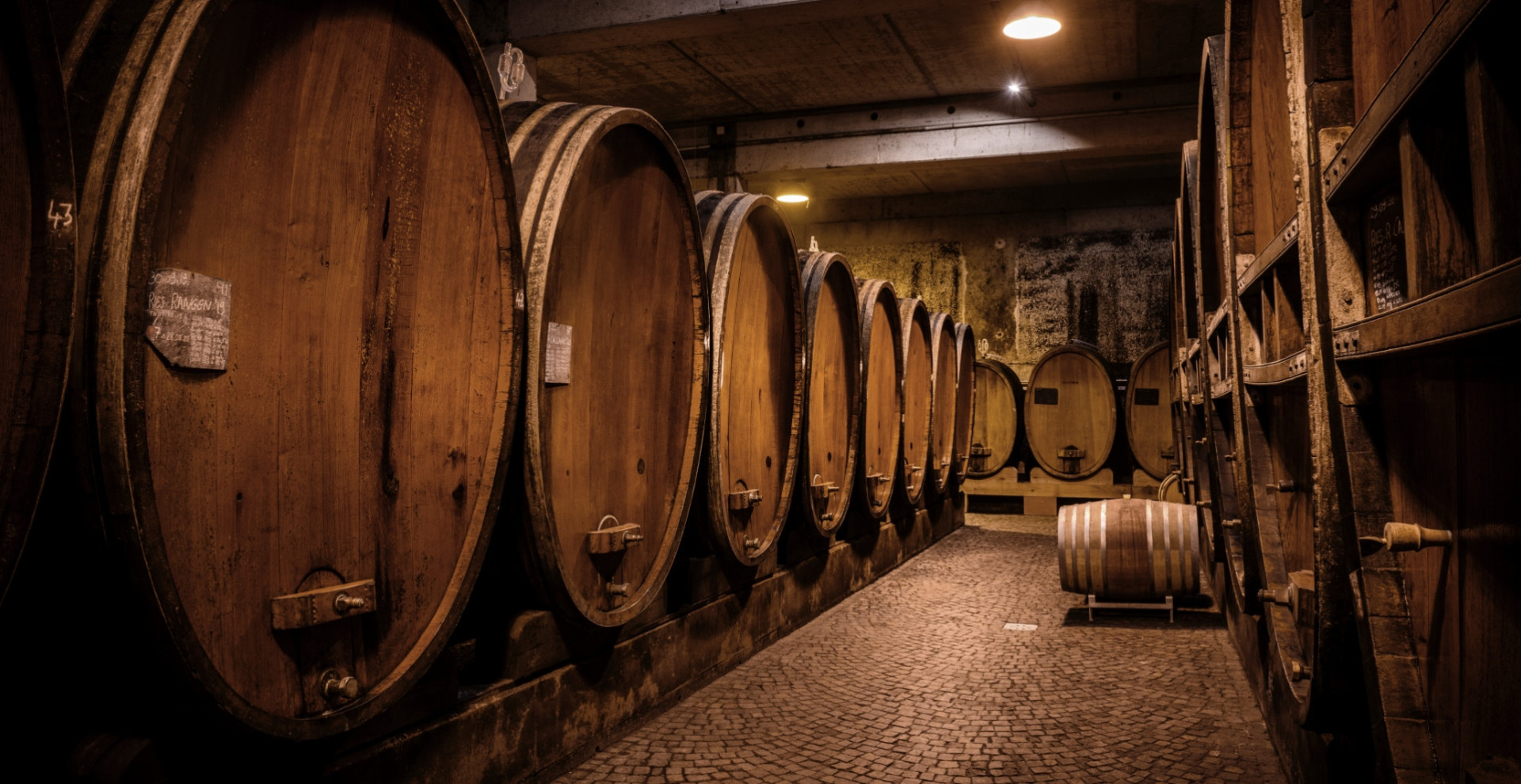
Alsace wines tend to focus on their primary fruit aromas (varietal aromas) rather than the characteristics of the oak barrels used for aging. This means that the wines are often traditionally stored in old casks that are unable to impart the characteristics of new wood. Traditionally, old oval barrels called cuves are used. They are sometimes over a hundred years old (most of them carved on the front) and are literally embedded in the cellars.
Beyond this general characteristic, the different Alsatian grape varieties tend to have very different styles. Riesling reigns supreme in Alsace, and its style is typically dry. This contrasts with the residual sugar found in many German Rieslings. Alsatian Riesling also tends to be chaptalized (sugar added before fermentation) to increase the alcohol content. Alsace also offers the possibility of producing superb sweet wines, labeled under the appellations Vendanges Tardives or Sélection de Grains Nobles (rarer and generally made from botrytized grapes). Gewurztraminer is the most commonly used grape variety for late harvest wines. This is because it makes it easier to obtain high sugar levels. These wines are known for their exotic and heady aromas and their clean and elegant flavors.
Alsace wines are distinguished by their production in cellars rather than "châteaux," with an emphasis on terroir. Among the iconic estates are Domaine Trapet and Domaine Trimbach, known for its great Rieslings, not to mention Zind-Humbrecht, which stands out for its wines made from biodynamically cultivated vines. Let's not forget Hugel & Fils and Domaine de l'Agapé, which produce elegant and precise wines. Another important estate is Domaine Weinbach, renowned for its biodynamic winemaking. In the biodynamic field, Domaine André Ostertag and Domaine Albert Mann shine with their Grands Crus. In addition, the cooperative cellars of Alsace are benchmarks such as Wolfberger and Bestheim, which produce high-quality Crémants d'Alsace. Négociants and wine & spirits importers from around the world regularly source from these iconic estates.
Alsace Chasselas ou Gutedel
Alsace Edelzwicker
Alsace Gewurztraminer
Alsace Grand Cru
Alsace Klevener-de-Heiligenstein
Alsace Muscat
Alsace Pinot Blanc ou Klevner
Alsace Pinot Gris
Alsace Pinot Noir
Alsace Riesling
Alsace Sylvaner
Crémant d'Alsace
The Alsace wine region has 53 appellations, including 51 Grands Crus spread across several communes. This recognition of the best terroirs (exposure, slope of the plots, geological characteristics) in Grand Cru areas, more or less similar to that of Burgundy, dates back to the 11th century. However, it was only between 1975 and 2007 that the regulations were clarified and enacted, guaranteeing by decree the authorized grape varieties (four varieties), planting densities, altitude of the plots, and soil characteristics. Considered micro-terroirs, these Grands Crus represent only 5% of Alsace's wine production but are home to the very best wines of Alsace. Among these Grands Crus, let's take a look at some of the most famous plot-based production areas:
Altenberg de Bergbieten
Altenberg de Bergheim
Altenberg de Wolxheim
Brand
Eichberg
Engelberg
Florimont
Frankstein
Geisberg
Gloeckelberg
Goldert
Graffenreben
Hatschbourg
Hengst
Kanzlerberg
Kastelberg
Kessler
Kirchberg de Barr
Kirchberg de Ribeauvillé
Kitterlé
Mambourg
Marckrain
Moenchberg
Ollwiller
Osterberg
Pfersigberg
Would you like your château, your domaine or your estate to appear on this page? Featured listings are reserved for Wine BHM Pro Premium members.
The Alsace Wine Route, created in 1953, stretches 112 miles from Marlenheim to Thann, passing through more than 70 picturesque villages such as Riquewihr, Eguisheim, Kaysersberg, and Ribeauvillé. Known for its enchanting landscapes, vine-covered hills and the Vosges mountains in the background, it offers an immersion in Alsatian culture. Emblematic grape varieties include Riesling, Gewurztraminer and Pinot Gris, accompanying the Grands Crus and Crémants d'Alsace. In addition to tastings in family-run cellars, visitors can explore medieval villages, castles (such as Haut-Koenigsbourg) and take part in harvest festivals or Christmas markets. Visit in spring for the festivals, in autumn for the harvest or in winter for the markets, this route is a must for wine and heritage lovers.
Strasbourg is the largest city in Alsace and is listed as a UNESCO World Heritage Site. The city center is located on the Grande Île. In the heart of its cobbled streets, visit Strasbourg Cathedral and the city's lively neighborhoods. Stroll through the streets of the historic La Petite France district and admire the colorful traditional houses, such as the famous half-timbered Maison des Tanneurs. Finally, to visit the city of Strasbourg, you can take a mini cruise on boats on the Ill River.
Notre-Dame Cathedral in Strasbourg, Alsace, is a masterpiece of Gothic architecture. During the Reformation, it was at the heart of religious debates, housing bishops linked to the province of Mainz until the Concordat of 1801. Since then, it has been exclusively dedicated to Roman Catholic worship.
The Alsatian Museum in Strasbourg is dedicated to Alsatian culture and traditions. The museum is housed in several half-timbered houses dating from the 16th century and contains a diverse collection that shows how people in the region have lived over the centuries. You will find everyday objects, traditional costumes, antique furniture, and local crafts. It is an essential place to discover the heritage and traditions throughout the history of Alsace.
The Vauban Dam, located in Strasbourg, Alsace, is a historic 17th-century building designed by military engineer Vauban. This defensive structure was once used to protect cities by flooding the plains during attacks. Today, it is an iconic location offering panoramic views of the covered bridge and Petite France from its roof. It is an essential stop for discovering Strasbourg's historical heritage.
The Orangerie Park in Strasbourg, Alsace, is a spectacular 26-hectare green space, perfect for relaxing and enjoying nature. Built in the 18th century, the park is surrounded by century-old trees, flower beds, and ponds. It is an ideal place for hiking, boating, and picnics. The park is also known for its Joséphine pavilion, a small romantic chalet, and its zoo which houses a small number of local animals. One of the most beautiful parks in the city, it is popular with locals and tourists alike.
Located 757 meters above sea level above the town of Orschwiller, Haut Koenigsbourg Castle offers spectacular views of the Alsatian plains. This monument is the most famous and most visited in the region. After being destroyed in 1633 during the Thirty Years' War, it was abandoned for a long period. In 1900, Emperor Wilhelm undertook a complete restoration. Since then, it has welcomed more than 500,000 visitors each year who are eager to immerse themselves in history and the world of chivalry.
The charming town of Colmar in Alsace is located at the foot of the Vosges mountains, in the heart of the Alsace wine region. Thanks to its favorable climate, it is known as the wine capital of Alsace. On the wine route, stop in Colmar to taste fine wines and admire the magnificent vineyard landscapes. The town itself is worth a visit for its rich architectural heritage. Discover the picturesque canals and covered markets of Little Venice, Colmar's most iconic spot.
Ribeauvillé, a charming little town in the Alsace region, is located in the heart of the Alsatian vineyards on the famous wine route. Known for its medieval charm, it features picturesque streets, colorful half-timbered houses, and castle ruins overlooking the town. Ribeauvillé is also known for its wines, particularly its Grands Crus. It is an ideal destination for lovers of nature, heritage, and gastronomy.
The old town of Eguisheim in Alsace is one of the most beautiful towns in the region. Classified as one of the "most beautiful villages in France," this charming medieval village is famous for its narrow streets, colorful half-timbered houses, and traditional architecture. The village is built around a castle, and the spiral streets surrounding the historic center give it its unique character. Eguisheim is also known for its wine, particularly Alsace wine, which offers visitors a warm and welcoming atmosphere.
Mulhouse, located in the Haut-Rhin department of Alsace, is a city with a rich industrial past. It is famous for its impressive museums, including the Automobile Museum, which houses the largest collection of cars in the world, and the Railway Museum, the largest railway museum in Europe. Discover the charming town center lined with colorful houses, Place de la Réunion, and the Renaissance-style town hall. Mulhouse is a destination where history, culture, and innovation come together.
The Unterlinden Museum in Colmar, Alsace, is one of the most famous museums in the region. Housed in a former 13th-century monastery, it contains a vast collection of art ranging from the Middle Ages to contemporary art. The Isenheim Altarpiece is particularly renowned for the masterpieces of artist Matthias Grünewald. The collections also include archaeological discoveries, sculptures, paintings, and decorative arts, offering a comprehensive and diverse overview of Alsatian and European art history.
Alsace is renowned for its traditional cuisine, and its gastronomic reputation is well established thanks to its Michelin-starred restaurants, traditional winstubs, and exceptional wines. The region's head sommeliers and wine merchants offer unforgettable tasting experiences. Here are a few places where you can discover the region's cuisine:
Villa René Lalique (Wingen-sur-Moder)
La Maison des Tanneurs (Strasbourg)
La Brasserie des Haras (Strasbourg)
Le Clou (Strasbourg)
Les Plaisirs Gourmands (Schiltigheim)
Le Vieux Strasbourg (Strasbourg)
Au Relais des Moines (Riquewihr)
La Table d'Olivier Nasti – Le Chambard (Kaysersberg)
La Cave du Tonnelier (Ribeauvillé)
Would you like your château, your domaine, your restaurant or your establishment to appear on this page? Featured listings are reserved for Wine BHM Pro Premium members.

Join the selection of producers on the platform.
Join the network*Featured listings are reserved for Pro Premium members, subject to terms and conditions.